Anything but painting by numbers!
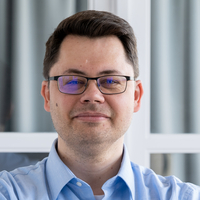
An interview with Stephan Betke
27 January 2023
Easy to use, lean and yet with almost infinite possibilities: e-publisher is the CMS of choice for anyone who favours customised digital solutions. Senior Developer Stephan Betke explains why the variable tool from 3pc is often superior to other systems.
Stephan, the e-publisher crops up again and again in our projects - from special interest sites to multimedia cultural event portals. What is the e-publisher - what can it do?
What can it do? Anything you want! - Perhaps I'll start differently: From the very beginning, e-publisher was a CMS and at the same time a tool for very specific challenges - the first projects included the binding database for the State Library or the programme management for the Volksbühne Berlin. These are things that a CMS cannot simply map out of the box. We always look closely at what the customer wants from us - and then we build it.
There are now variants of the original e-publisher from over 20 years ago: On the one hand, there is the e-publisher:stage, which actually developed from the Volksbühne Berlin. This is designed to create play programmes for cultural institutions. Then there's e-publisher:mail, mainly for newsletters.
And we have the Pro version, which ultimately covers all other possibilities and can handle an extremely wide range of different data. It is used for geodata, for example: monument databases, urban tree campaigns, special applications like that are done with the Pro version.
I can't really imagine it yet, could you give me a few more examples?
It ranges from super simple to super complex. From very simple pages, for example for smaller companies, which are actually purely representative pages with a news section. Or landing pages for a specific event - in the end, not much happens: the editors can maintain the images and content for this landing page, and there is also the usual registration option.
However, the applications can be expanded to include really complex systems with many data sources: One example of this would be the online building atlas for the Berlin Senate Department for Urban Development - a database that records all new buildings in Berlin since reunification. For each individual building, including geo-coordinates, street, building outline, architect, client, construction sum, construction measure ... A very complex process, because information comes from very different sources and is constantly being added to - all with the e-publisher.
This data can be accessed online, but it also serves as the basis for an interactive model of Berlin's city centre, so once entered it can be used many times over.
Speaking of buildings and monuments: I'm sure you've already gathered information on the website of the State Monuments Office on Monument Day and put together an exciting programme ...
How can I use the e-publisher for the long Monument Day?
Yes, exactly! But also if you are a culture lover: on the website of the Frankfurt Opera or the Lessingtheater Wolfenbüttel, we had the Volksbühne in Berlin, Kampnagel in Hamburg, the Junge Staatstheater an der Parkaue, the Dresden Philharmonie and the Kulturpalast Dresden, the Teddy Award as part of the Berlinale, the Deutsches Symphonie Orchester Berlin ...
We recently developed a new audio guide based on the e-publisher: first used for the Berlinische Galerie, it can now also be used for other areas.
The e-publisher is not a one-fits-all product, but always a customised solution. This means that we engage with our customers. With what they need and what they want. And that's exactly what they get.
Didn't you also say something about research projects in the preliminary discussion?
Yes, very exciting! There are special library projects, for example with transcribed original letters from writers or the correspondence of famous people, which make the respective events of the time accessible in a completely new way. Even family trees of entire dynasties - a technical system is incorruptible, and in some cases it has even led to new research approaches.
I am quite overwhelmed ... Is the e-publisher better than conventional systems?
No, the e-publisher is not necessarily better. However, we fulfil a niche with our e-publisher: The e-publisher is not a one-fits-all product, but always a customised solution. This means that we engage with our customers. What they need and what they want. And that's exactly what they get.
Accordingly, the e-publisher is also much easier to learn. And often faster than other systems because it remains lean thanks to its customisation and doesn't carry around unnecessary ballast. The motto is: you want it this way, you get it that way.
And what if someone doesn't know exactly what they want?
That's actually quite normal. But no problem, we find out together with our customers: We come to them, we listen to what they do and what they could imagine. We then make suggestions as to how their projects and concerns could be presented online and discuss this with them. And we are also in constant dialogue during the implementation phase until we have a convincing result.
Tailored precisely to the respective purpose sounds like the ideal solution - so why are there any other CMSs other than e-publisher?
You can actually cover everything with e-publisher - but sometimes it doesn't make sense because we would first have to programme something that others have already done. Of course!
Others don't want to use a proprietary system created by an agency, but prefer an open source system such as TYPO3.
That's also possible - so be it!
Many systems are very difficult to use because they are bloated and therefore not really convenient.[...] This is different with e-publisher: it is already in the background from the time of conception and material collection, the data can be set up there and then for later use.
But it's pretty time-consuming for you, isn't it?
Actually, the work is never boring! I think it's great: so many interesting people, so many interesting projects. The e-publisher is not just painting by numbers, you really have to familiarise yourself with the projects, understand them and then be able to implement them. I've been doing this for 20 years and I still find it really exciting!
I personally love the historical projects - some of them really quirky and for a target group of just a handful of researchers, like the State Library's binding database I mentioned. Sometimes you get a glimpse behind the scenes that normal people are otherwise denied. There's something new every year - I've always enjoyed that.
And, not to forget: An extremely important point is also our great team. We get on well together and can work well together, a very pleasant working atmosphere.
Lots of options, customised to the respective project - doesn't that make e-publisher more expensive than other products?
I wouldn't say that. Many systems are very difficult to use because they are bloated and therefore not really convenient. The result is extremely long training periods for the few people within an organisation who can then use it. In addition, you often work on different platforms to collect materials, structure them and so on.
This is different with the e-publisher: it is already in the background from the time of conception and material collection, and the data can be stored there immediately for later use. Images, graphics, texts, videos, real-time data sets, additional information ... much of it can be edited and customised later. This works for an exhibition as well as for school materials, service companies or administration.
In other words: compared to TYPO3, WordPress, Contao, Drupal or other systems, the e-publisher does not have a fixed application purpose, but is always programmed by us. That's why we can ultimately do anything - we are currently building a variant as a headless CMS that can be used to display the collected content and data on all possible platforms and devices. Of course, we also have the use of AI in mind as a long-term goal, which is a natural next step ...
We are extremely flexible in this regard. And stay curious: I'm already looking forward to the next e-publisher projects!