A new digital identity for the Goethe-Institut

The Goethe-Institut is the globally active cultural institute of the Federal Republic of Germany and has been fulfilling central tasks of foreign cultural and educational policy worldwide for over 50 years.
With the audit of the overall digital presence, we systematically analysed the Goethe-Institut's digital strategy to date and developed recommendations for how the renowned organisation with its 157 Goethe-Instituts in 98 countries can and should position itself in the future.
What does the Goethe-Institut stand for in the digital age?

A 360° analysis brings light into the darkness
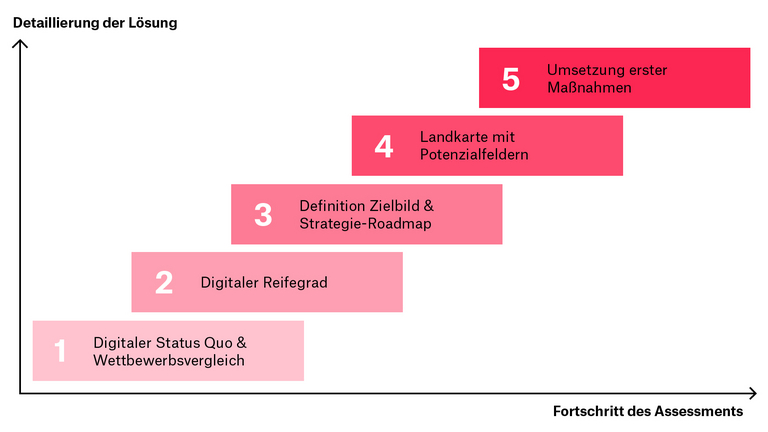
The first phase of the audit comprised a 360° environment analysis as the essence of a comprehensive market and competitive overview of online language offerings. Key digital technologies and their potential areas of application were also identified in this phase. Furthermore, we used use cases and best practice examples to provide suggestions and initiate a dialogue on how the topic of digitalisation can be mapped at the Goethe-Institut and what degree of digitalisation is necessary. We also looked at the topic of organisational development - as an important foundation for a holistic, future-oriented digital strategy.
For us at the Goethe-Institut, digitalisation is not just a technology topic, but above all a topic that moves and changes our societies.
The digital maturity of the Goethe-Institut
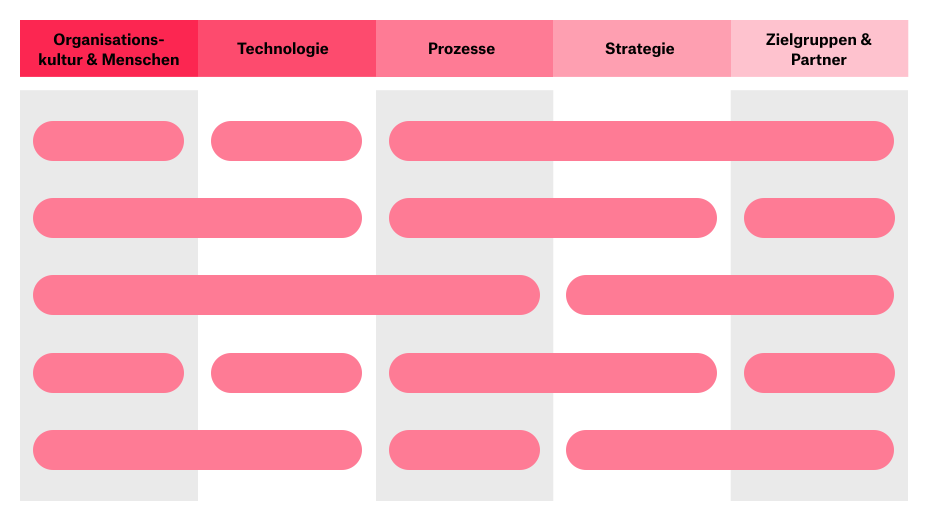
The perspectives of important internal and external stakeholders of the Goethe-Institut were then surveyed. A digital maturity model with 25 assessment criteria was developed specifically for this purpose.
Within a few weeks, we conducted 40 interviews with representatives from different regions and departments, organised workshops on various key topics and reviewed numerous documents. More than 900 "gain points" and "pain points" were identified, which were used as the basis for determining the Goethe-Institut's digital maturity level and highlighted the need for action in various areas of the organisation.
The audit is intended to describe where we need to develop in the foreseeable future so that we have sufficient relevance and expertise to continue to fulfil our mission well.
A new digital strategy for the Goethe-Institut in Moscow
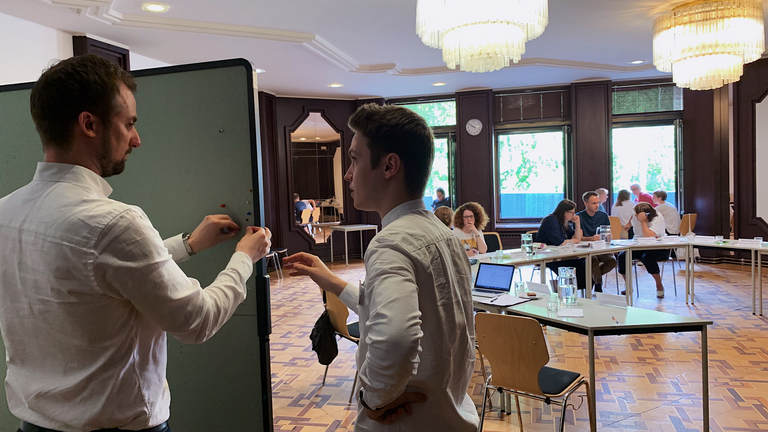
Together with stakeholders from the Goethe-Institut in Moscow, we have developed a new regional digital strategy.
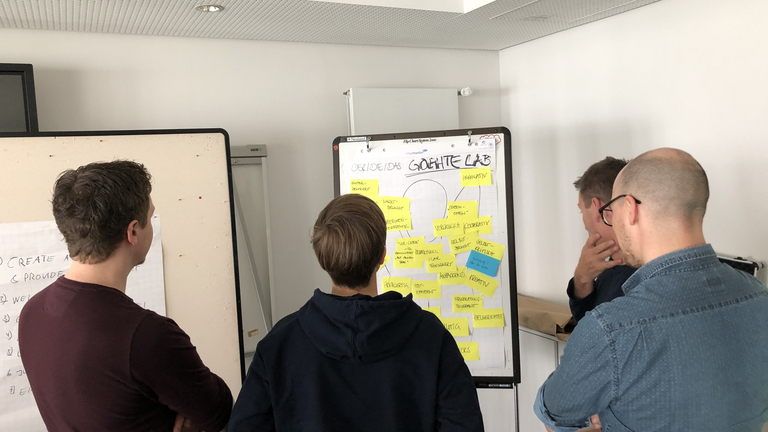
The emergence of a new organisational unit: the Goethe-Lab
With the establishment of the Goethe-Lab as a new organisational unit, the Goethe-Institut is repositioning itself in the field of innovative language technologies.
Photos from Moscow: 3pc
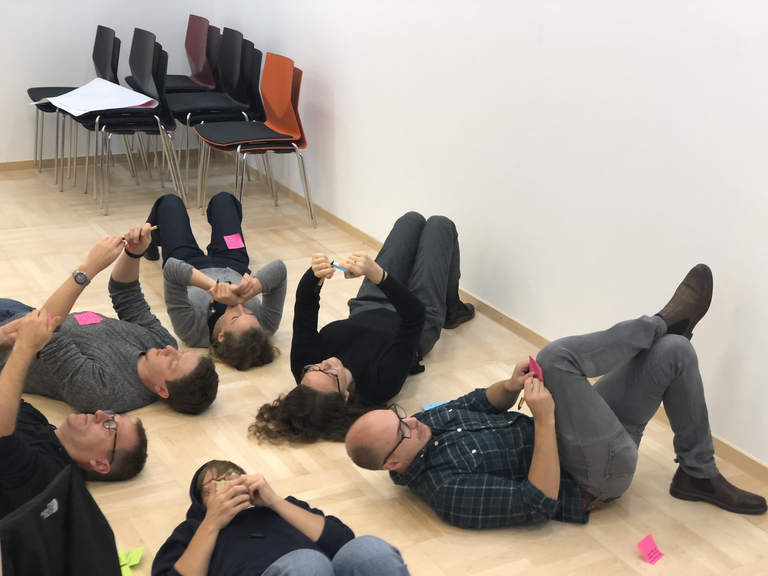
New ideas sometimes require a change of perspective: Goethe Lab workshop
A new foundation for the digital strategy
Based on the results of the as-is analysis, key fields of action were defined and specific recommendations for action were made. The fields of action cover the various dimensions of the Goethe-Institut's digital transformation and form a framework for a comprehensive action plan. With our implementation-orientated approach, we have already implemented nine measures as part of the project using various sprints over a period of six months, as well as developing and launching further initiatives in Germany and abroad.
Within a year, an extensive change process was initiated and a transformation programme developed to prepare the Goethe-Institut for the future challenges of digitalisation.
We were able to take away 3 key learnings from this exciting project:
- Digital transformation is particularly successful when it is approached from an overall organisational perspective and the various dimensions of digitalisation are taken into account - from the development of digital offerings and employee training to the design of the IT organisation and internal communication.
- The development of digital strategies must take into account the individual maturity level and culture of the organisation in order to set realistic goals, create acceptance among employees and anchor the digital transformation in the organisation in the long term. This also includes clearly addressing grievances and acting in partnership instead of reducing the organisation to its role as a service provider.
- Strategic concepts must always be developed with a high degree of operationalisation in order to create orientation and clarity. Digital implementation expertise requires a combination of different disciplines and skills. In addition to an in-depth understanding of the market environment, this includes consistent prototype thinking and a high level of technical solution expertise.