Baden State Museum
AI as the key to the museum archive
The Badisches Landesmuseum presents the culture of Baden in dialogue with artefacts from the cultures of the world with a focus on Europe. 3pc helps visitors to experience this treasure trove individually with the help of AI.
Hidden world behind closed doors
13,000 exhibits in the public display collection - and 500,000 objects in the depots: Museum organisers around the world face the same challenge as the Badisches Landesmuseum in Karlsruhe: only a fraction of art and cultural history objects can be presented live. But should the bear part be "lost" in the vaults because of this? How do I make this hidden world accessible to the public in a meaningful way?
Overwhelming digitalised diversity
In response to digitalisation, the Badisches Landesmuseum is expanding the museum area into the digital world. However, without some kind of common thread, interested users are lost in the overwhelming abundance of digital exhibits: If you are interested in historical vases, you might enjoy looking at 15 of them online. However, if they receive hundreds of hits for the search term "vase", their initial enthusiasm usually quickly turns into overwhelm. Emotion? Enjoying stories about the exhibits? Not a chance. The visitor to the virtual exhibition turns away.

Boldly breaking new creative ground
A kind of "AI-supported assistance system" could resolve this dilemma - the Badisches Landesmuseum, together with the Allard Pierson University Collection from Amsterdam, approached 3pc with this idea. New territory within the museum landscape!
Naturally, this raised very fundamental questions in the first major part of the project: Would it be possible to use artificial intelligence to support users in their individual creative engagement with the collection?
xCurator: AI with vision
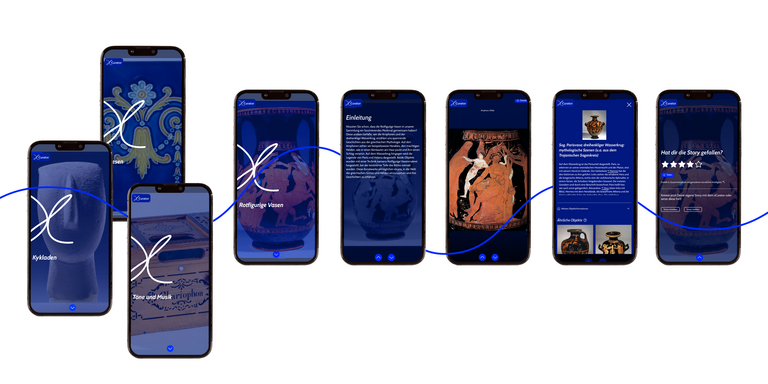
No trained exhibition curator is then available to assist interested parties in their exploration of digital collections - which is why we developed the AI application xCurator in close collaboration with our clients with a very clear focus on a user-centred design approach. Discovering history and stories, creating your own user journey, clicking on other digitised objects with their images, keywords and descriptions out of curiosity; finding cross-connections - not only via text, but also via image similarities or linked external databases or encyclopaedias: all of this was part of the vision. Would it work?
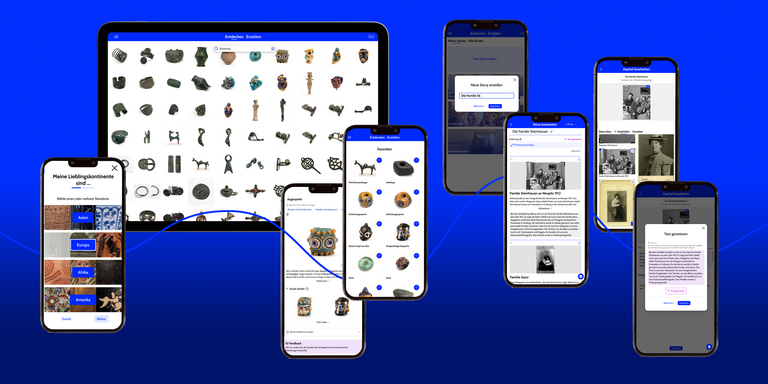
AI with a wow effect: helping to shape instead of "just" visiting
This question has now been answered: the beta phase of xCurator is underway and - yes, it works!
Different user groups can now use the xCurator to create completely new and innovative collections of objects, place museum content in new contexts and build their own stories around their favourite objects. The xCurator empowers visitors to embark on their own individual journey through the labyrinth of possibilities - they become active co-creators of the museum. And, as can be seen from the numerous imaginative stories that have already been created, they do so with a great sense of discovery and fun.